
Bees can be scary to many people, especially those who are allergic to their venom. And I get it, stings are painful and potentially deadly. I recommend staying clear of their hives if you are allergic. Never swat at a bee. Typically, if you leave them alone, they have no interest in you. If they view you as a threat, they will die to protect their resources, sisters and their queen.
Let’s explore why bees are fascinating.
- A single colony may be anywhere from 20,000 to over 80,000 in population.
- The colony consists of one queen, drones (male bees) and workers (female bees).
- A queen is the only bee who can lay fertilized eggs. She goes on a mating flight about a week after she emerges from her cell. She mates with several drones from other colonies and returns to her hive to never leave again unless the colony decides to swarm with her. More on that in another article!
- Worker bees will lay eggs if the colony determines it’s queenless for too long. A beekeeper will recognize this by observing multiple eggs laid in a single cell.
- If you see a bee in the wild, it’s likely a worker. They are the only bees out collecting pollen, nectar and water. A drone’s sole purpose is to mate.
- A worker bee will die after stinging because she loses her stinger. The end of her stinger has a small barb on it that hooks into its victim.
- Drones do not have stingers, therefore they cannot sting.
- Queens have stingers, but they are not barbed. A queen will sting competing queens in her colony. An example of this is when multiple queens are born (emerge) simultaneously.
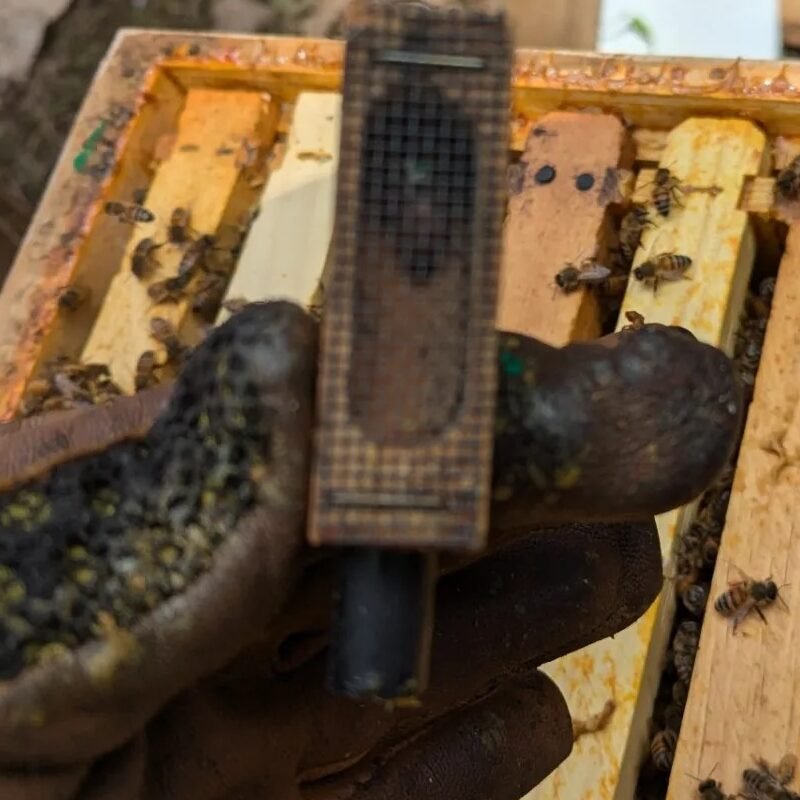

Queen
- The only fertile female, responsible for laying all of the eggs – up to 2,000 per day!
- She regulates the hive through her pheromones.
- She is the longest bee, slender, with noticeably shorter wings.
- Queens can live for several years, however their pheromones are strongest in year 1.
- To become a queen, workers feed the larvae royal jelly, a nutrient-rich secretion produced by the worker bees, made of water, protein, carbohydrates and 10-HDA fatty acids.
- Development of a queen, from egg to emergence, is 16 days on average.
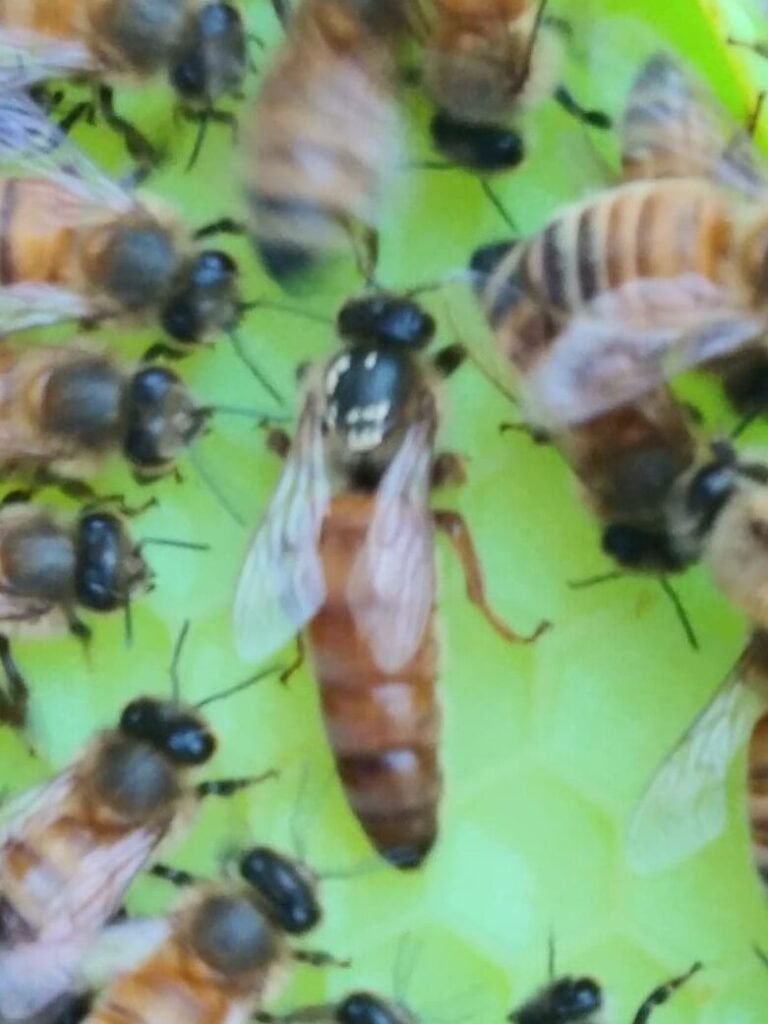
- Beekeepers tend to mark a queen with a paint marker for easy queen-spotting. Colors represent different birth years.
Worker
- The female bees that perform all the cleaning, feeding, comb building, guarding, and foraging for the colony.
- They are unfertile and capable of laying eggs.
- Workers develop from fertilized eggs. Drones develop from unfertilized eggs.
- These girls are the smallest of the colony, with a short, rounded abdomen and long wings.
- Development of a worker, from egg to emergence is 21 days.
- Workers only live a few weeks to a few months, usually expiring because of exhaustion.
- Their role in the hive changes as they age. Older workers have foraging duties, for example.
Drone
- The male bees of the hive have one purpose: mate with a queen from outside of their colony.
- Unfortunately for them, they die after copulating.
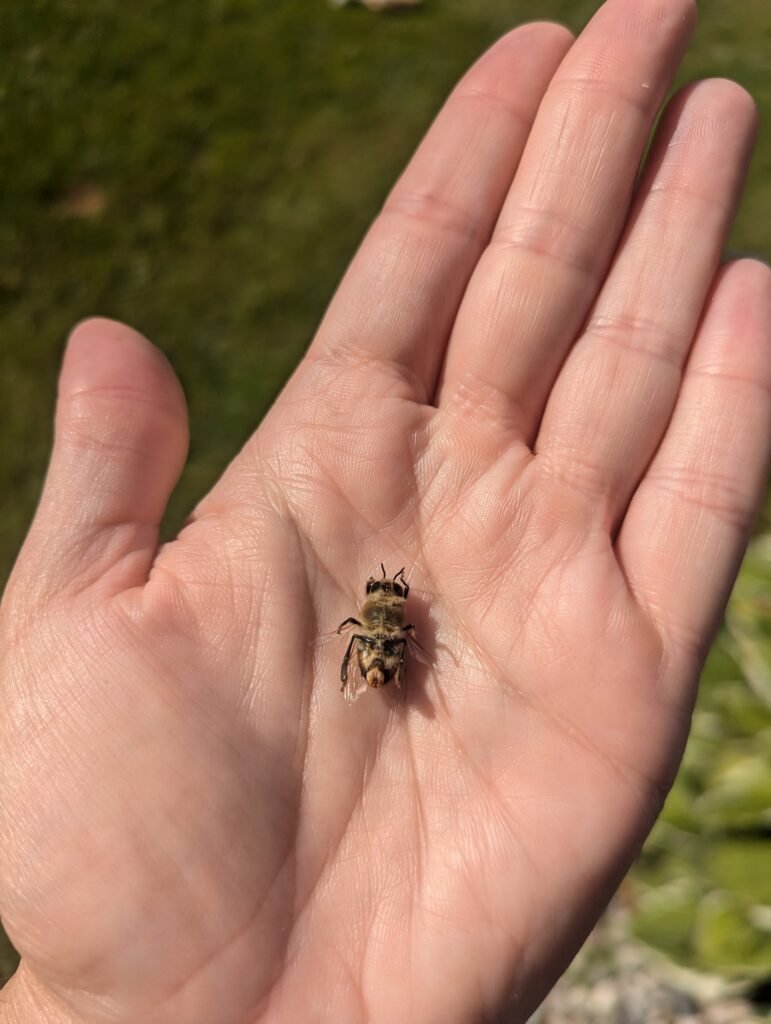
- They are the largest bee in the colony, with a stout body and wrap-around eyes that aid them in queen spotting.
- Drones develop from unfertilized eggs.
- Development of a drone, from egg to emergence is around 24 days.
- In the autumn they are kicked out of the hive by the workers in an effort to save resources (food) for the winter.
Pages: 1 2