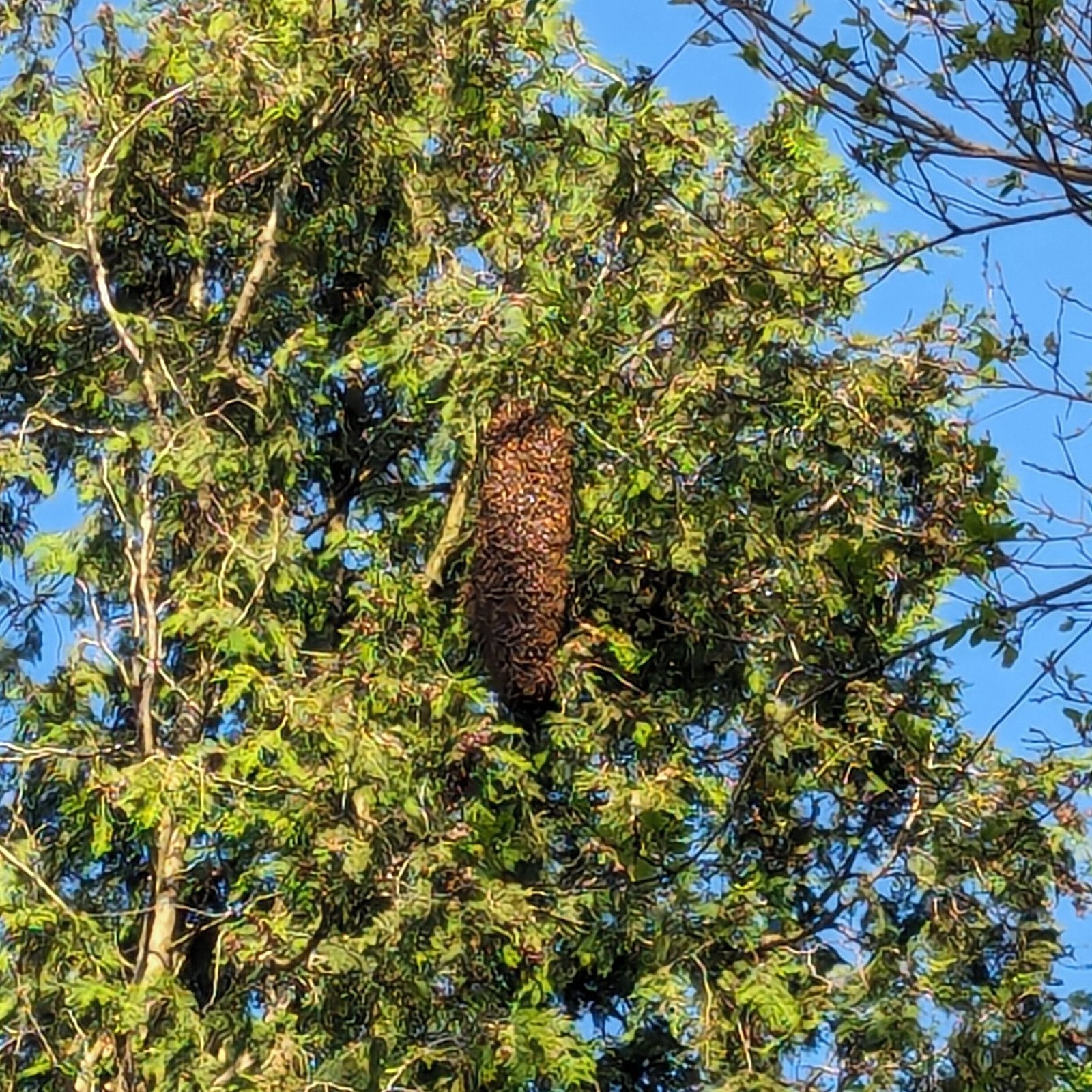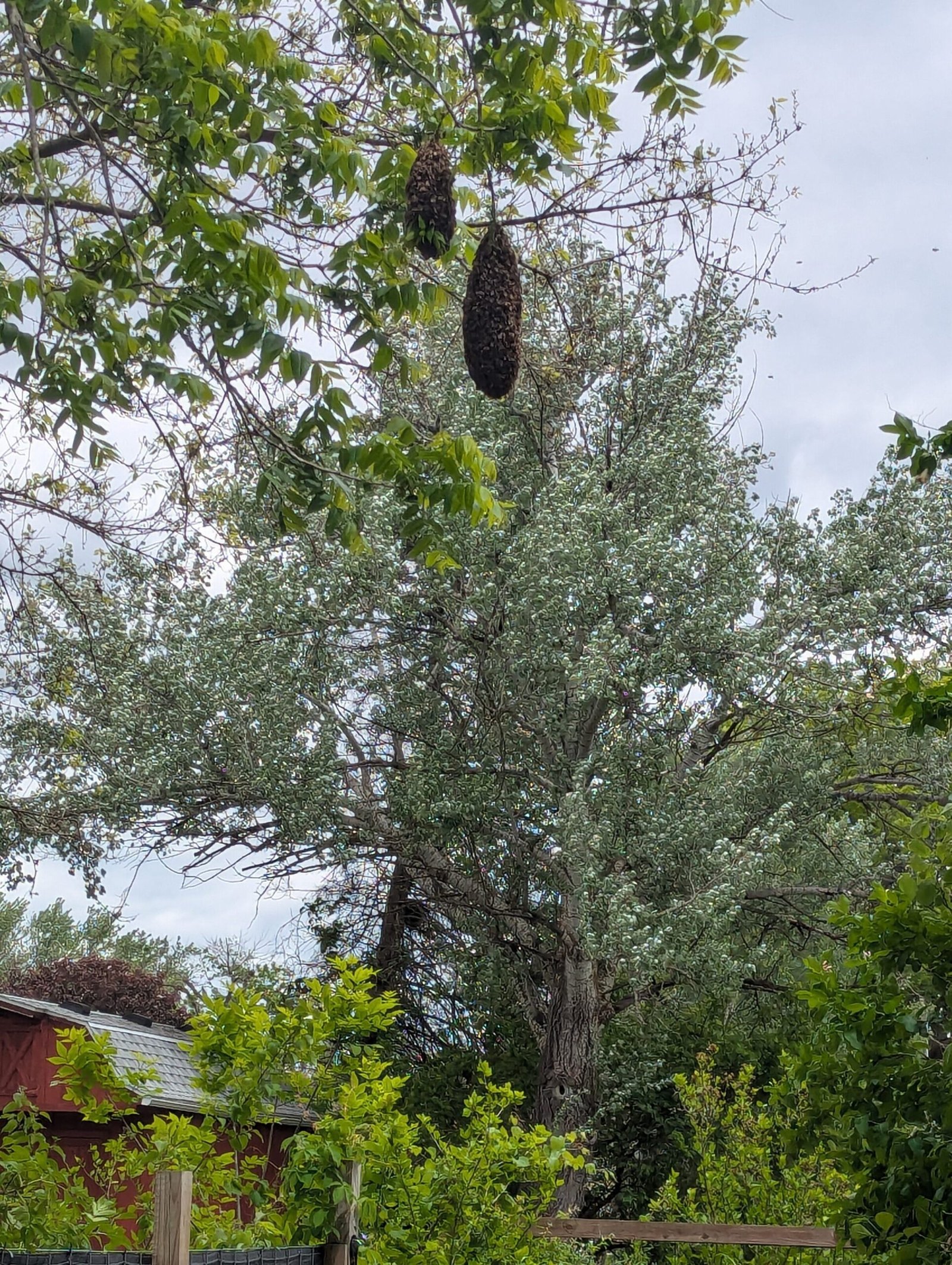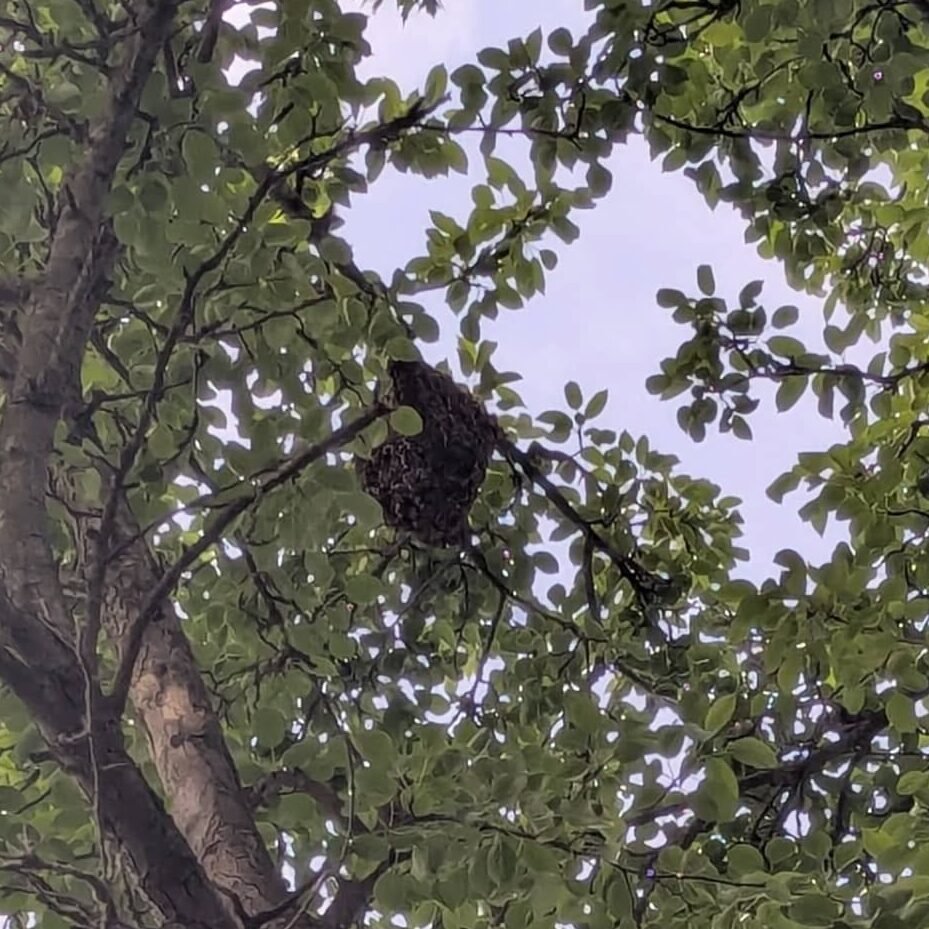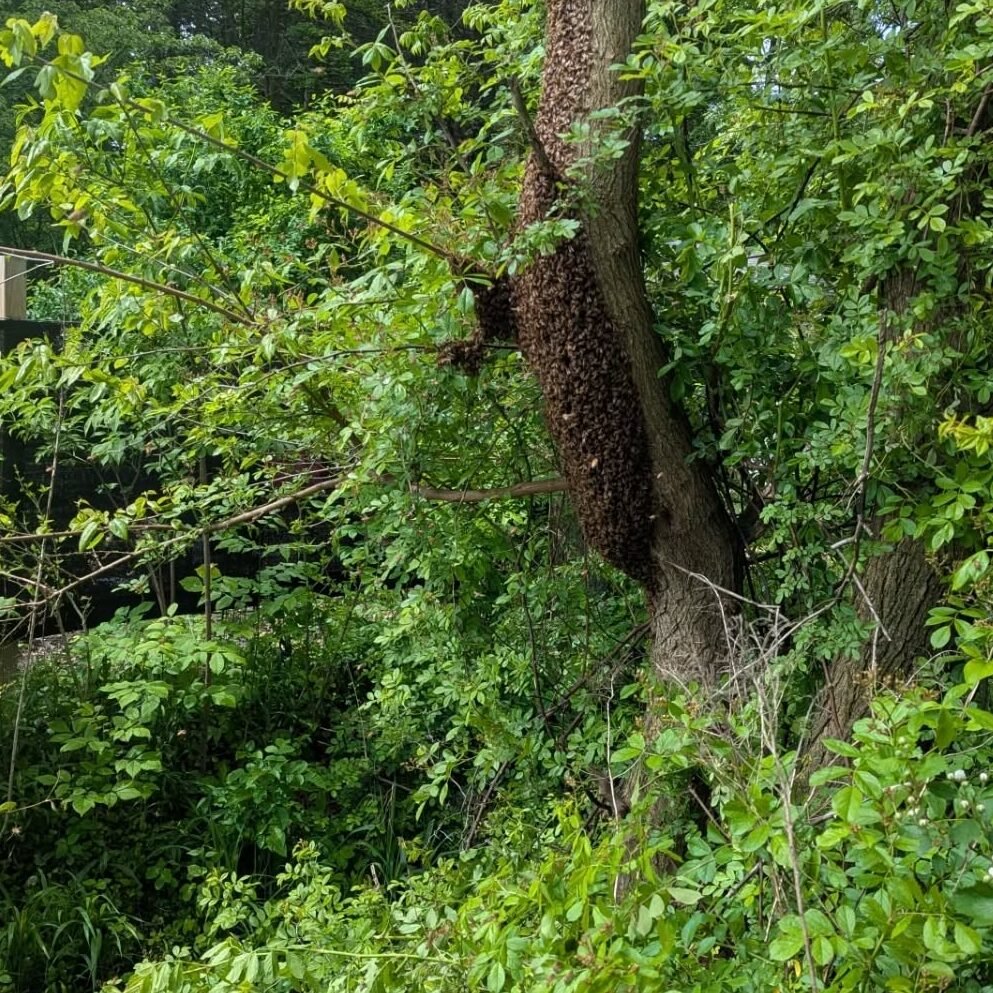
Swarms are a natural part of beekeeping. I was always disappointed in the early years as all I could see were $$$$ flying away from me. After a few failed attempts at catching swarms that landed high in trees, I realized it’s not necessarily a bad thing. A colony swarms when its population grows too large for its hive. Only a healthy hive will grow too large. The benefits of swarms are great. The colony gets a natural brood break because their mated queen left. A new, virgin queen, who will soon mate and become the new mother, displays stronger pheromones and higher egg laying. A brood break means you also get a varroa mite break as mites proliferate in capped brood. Additionally, a beekeeper can potentially catch the swarm to grow their colony count. Make sure to have extra woodenware and frames on hand! IYKYK!
- Swarm prevention: split your colonies in the spring. This doesn’t always stop swarms but it certainly helps.
- Splits can be sold as nucleus colonies (nucs) for quite a lucrative return. Nucs are generally 5 frames of brood, bees, pollen, honey, and a queen.