WARNING: Do not feed honey to infants under 1 year old, no matter if it is raw or pasteurized. Botulism is a risk that babies cannot fight.
It’s a collection of plant nectar that is stored and transformed by bees into a thick, sweet liquid that is edible. In fact, humans have been harvesting honey for thousands of years for its medicinal, nutritional and preservative properties. Honey is primarily fructose and glucose. It is the only food consumed by humans in which insects produce.
How do bees transform honey?
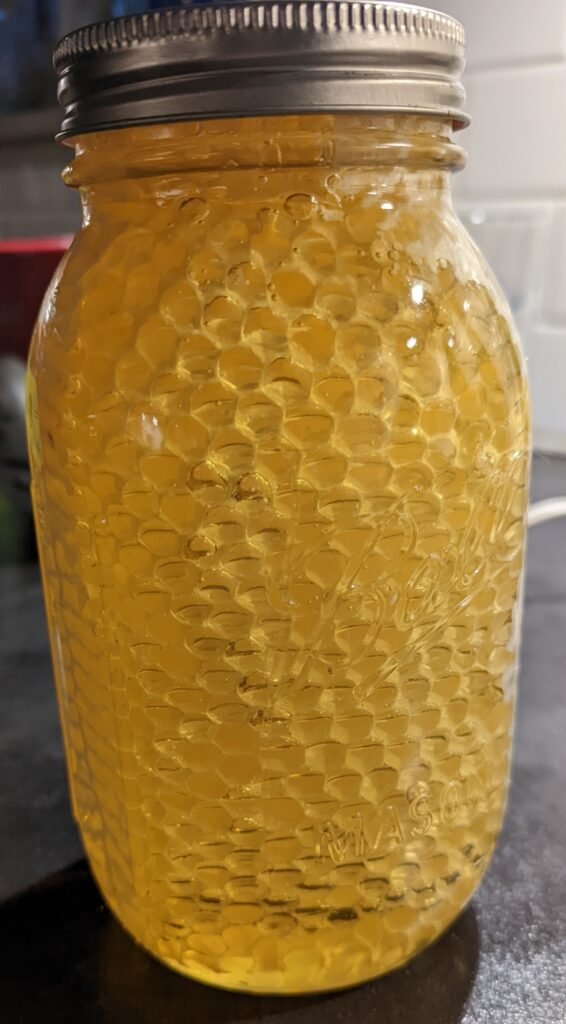
- They collect nectar from blossoms & store it in their “honey stomach”, return to their hive and regurgitate it into the honeycomb that they’ve built.
- Through flapping their wings, moisture content in the liquid is evaporated.
- Once moisture is to the desired level, the bees cap over the honey with a thin layer of wax, which they also make.
How do beekeepers collect honey?
- Honey supers, or bee hive boxes often called “mediums” are placed on top of the brood chambers (deeps) when nectar flow starts.
- The reasons for this separation is to leave the bees with the food they’ve collected for their brood and to stop the risk of using stored sugar from the prior season. Beekeepers should stop supplemental feeding a few weeks prior to adding supers.
- Once frames are capped over, it’s time to extract. There are many methods to get the bees off of the desired honey frames. We use a tool called an escape board. It’s placed between the super and brood chamber 24-48 hours before super removal.
- Frames are removed; lingering bees can be brushed off to prevent bringing them into the extraction room.
- The thin layer of wax is cut off with specialized knives or decapping forks.
- Frames are placed inside of an extractor, or spinner, and spun in both directions. Through centrifugal force, the honey leaves the comb and runs to the bottom of the extractor.
- This is where it’s strained or filtered into 5-gallon food-grade pails through the extractor’s gate at the bottom.
- Some beekeepers sell honey frames, some sell the pail (60 pounds if full).
- Pails have gates at the bottom which are used to fill individual jars or bottles.
Does honey spoil?
- No, it is one of the few foods that does not expire. If too much moisture is left in it at bottling, it may ferment if not pasteurized.
- High quality, unpasteurized honey will crystallize especially if it gets cold.
- Do not refrigerate honey.
- See our FAQs for more about crystallization and pasteurization.
Why are there so many flavors & colors of honey?
- The flavor profile depends on the sources the bees collect from.
- Different sources will alter the color of the honey. For example, buckwheat and goldenrod honey are dark with a rich flavor, like molasses. Clover honey is mildly sweet and light in color.
- Commercial beekeepers transport hives to orchards for pollination services. Depending on the farm, the honey will usually end up as a mono-floral product. Think orange blossom, apple blossom, or lavender honey.
- At higher temperatures, honey will darken in color. I’ve made hot honey by heating up the honey with a hot pepper. It became significantly darker than its original form.
But, what is honey?
- It is 17 grams of carbohydrates per tablespoon.
- It is 17 grams of sugar per tablespoon.
- It is 60 calories per tablespoon.
- There is little to no protein, fat, and trace amounts of minerals.
Does honey actually help with allergies and colds?
- Perhaps. It is not medically proven, but who am I to rain on your placebo effect?
- It sure does feel soothing on a sore throat and aids in suppressing a cough.
- Garlic fermented in honey can be used for an additional immune-boost.
Is honey antimicrobial?
- Yes, due to its high sugar content, enzymes and low pH.
- Folks have been using honey for wound care for centuries.
I’ve heard of Manuka honey. What is it?
- Non-peroxide honey that displays antibacterial and anti-inflammatory effects.
- Compared to other honey, it has higher concentrations of methylglyoxal (MGO) and leptosperin, contributing to its superior strength.
- It comes from the Manuka bush found in Australia and New Zealand.
What is the white stuff on the top of my honey?
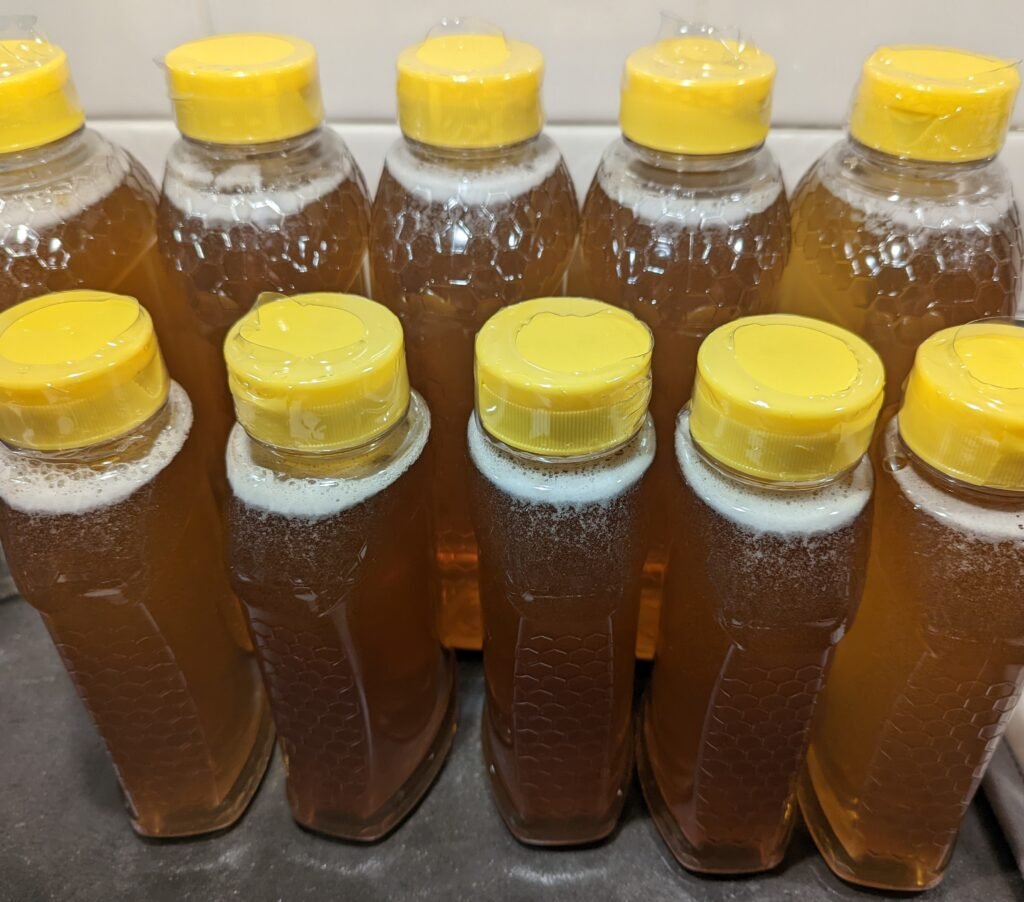
- It’s harmless! In the process of extracting and bottling, air bubbles, pollen, and wax particles float to the top. We try to skim off this thin layer of “foam” but sometimes small amounts end up on our bottles.
- It’s a sign that the honey is raw.