
I wanted to create a newsletter called “Inside the Hive”. The idea is to show you what goes on inside the hive as many people don’t get the opportunity to see such things up close.
It’s May 2026 and the newsletter this month should be called “Outside the Hive” 😂 May is typically the time when colonies have built their population so much that they decide to swarm. And swarming they have done. Within two weeks I have caught 12 of my own swarms! I know about 14 of them. One flew away before I could get it and another, well, I just left it because I didn’t have time. It wasn’t big anyway.
You might be asking yourself why bees swarm and how would a beekeeper prevent it. Just so you know, beekeepers who lose bees in swarms call themselves “bee-havers” 😉
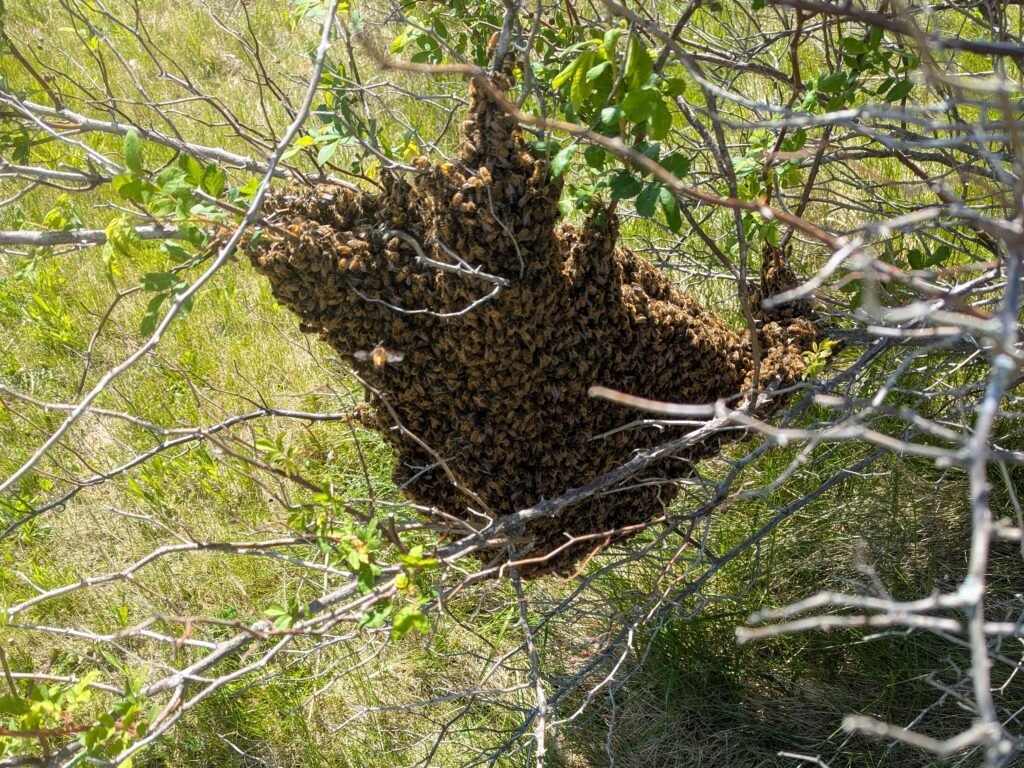
Bees typically swarm because they’ve outgrown their home. Approximately half the colony will leave with their queen, or even with a virgin queen. They build new queens with female eggs by feeding royal jelly. Once those queen cells are well on their way, the bees will pick a decent weather day to take off. Where do they go? Usually up high in a tree, but they’ll go anywhere they deem fitting, temporarily. As you can see, they like my wild bushes & fence posts.
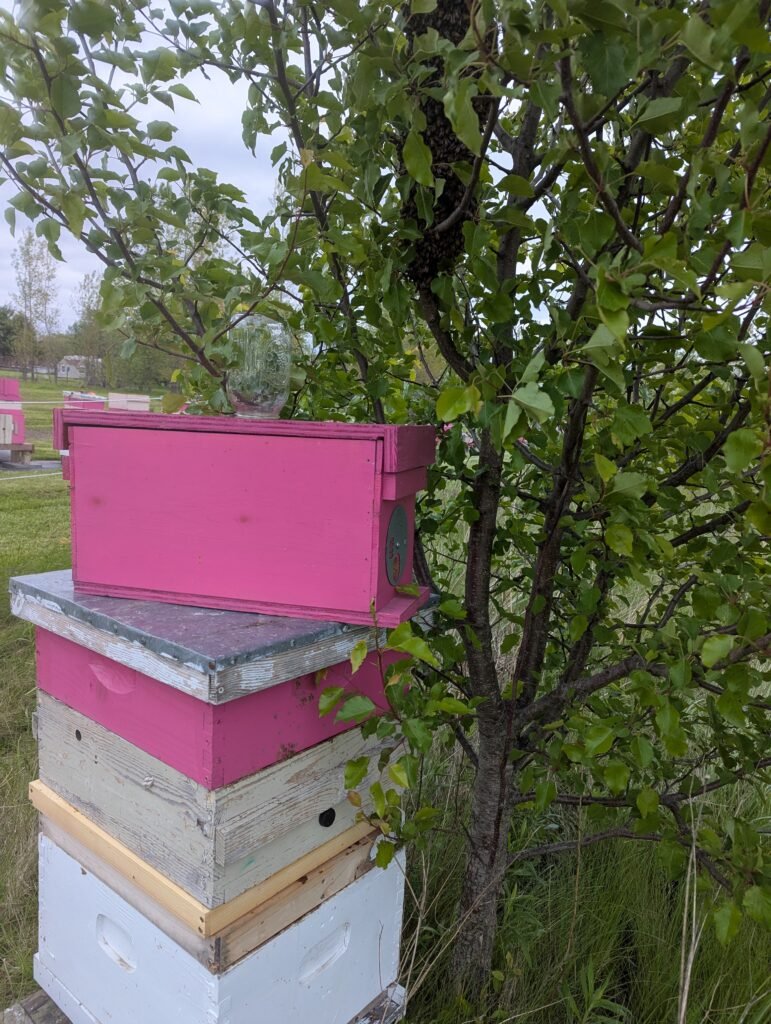
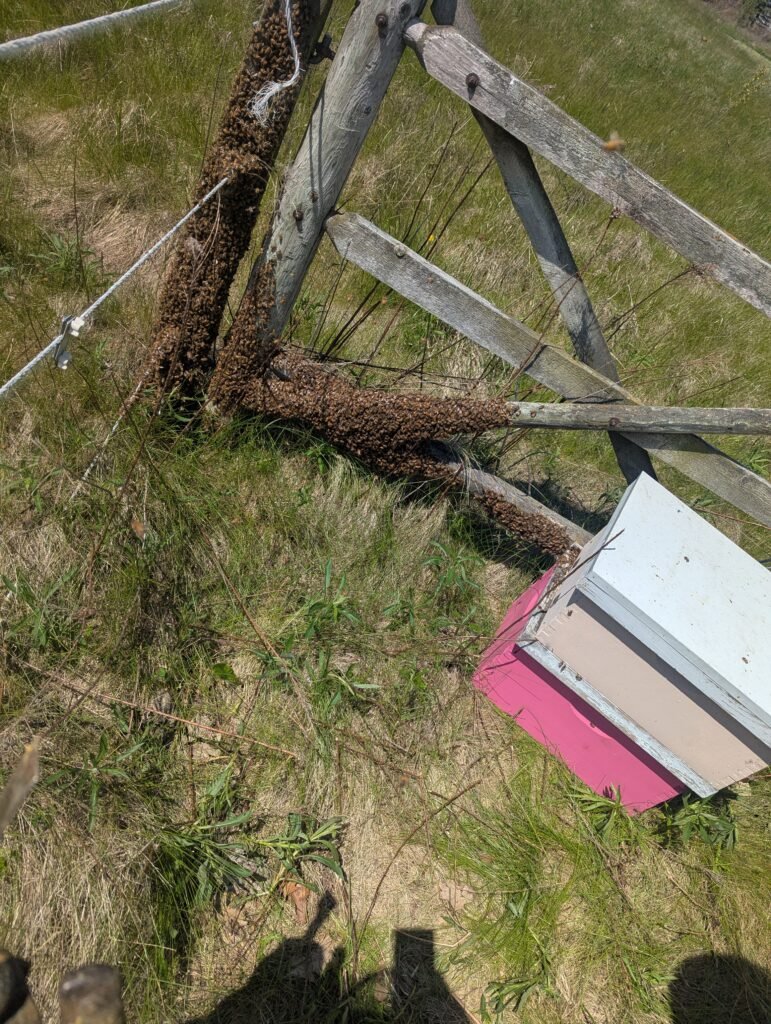
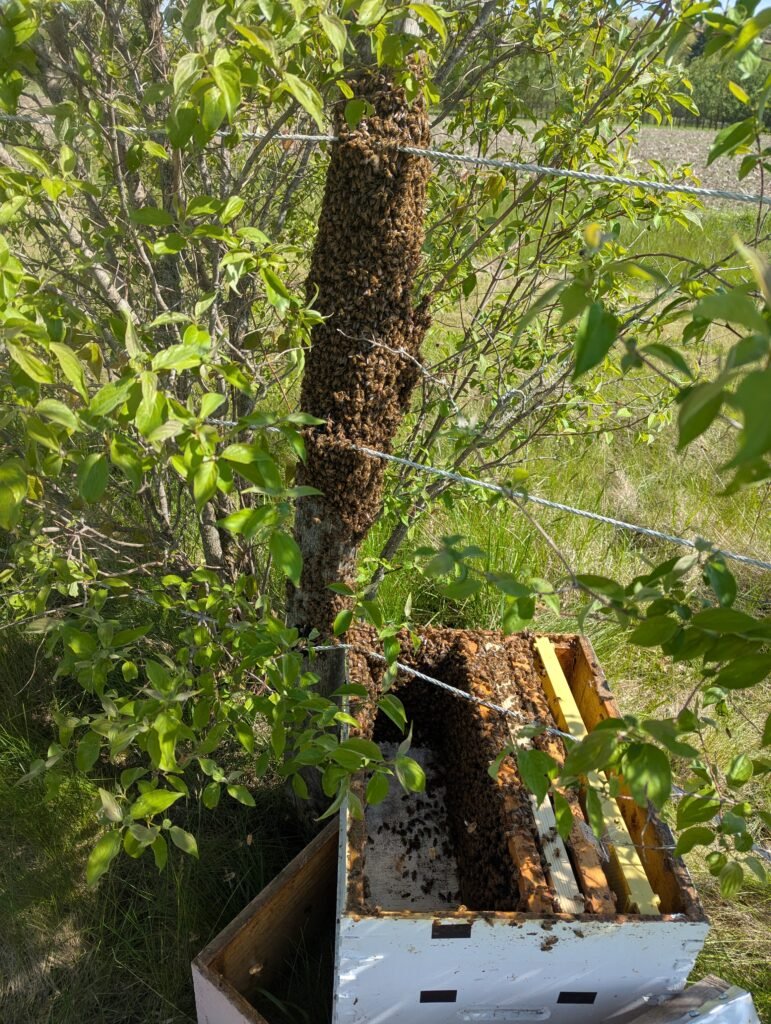
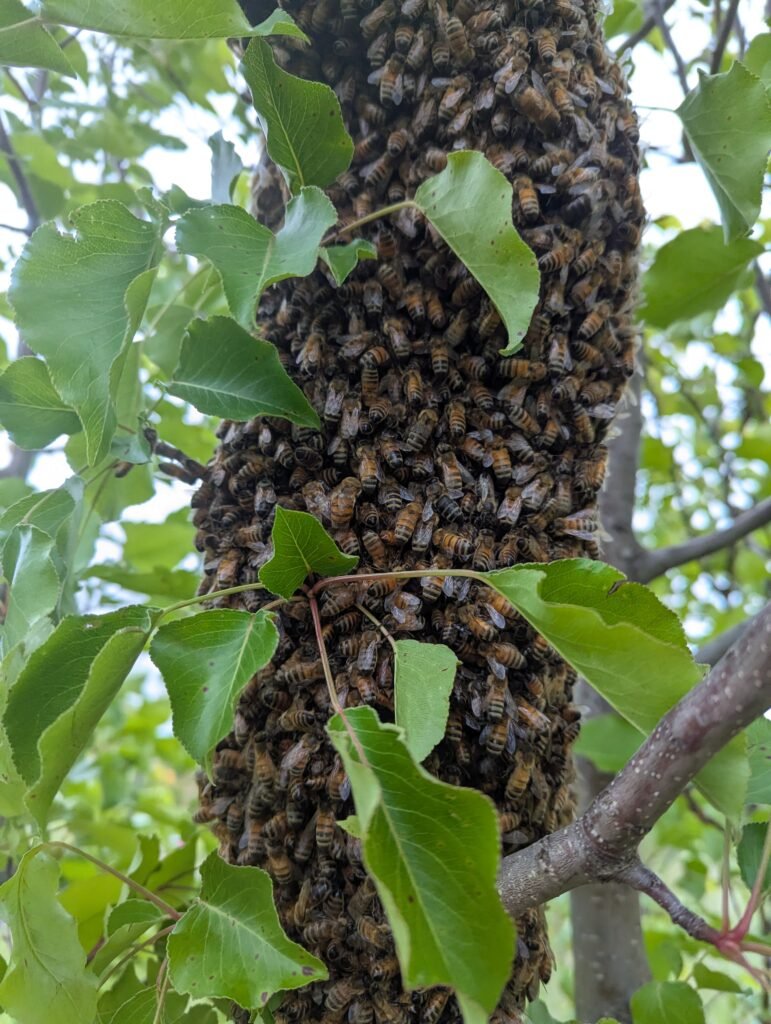
Prevention: The best way is to split colonies before they decide to leave. Queen cups are the first sign of a colony planning to swarm. Swarm cells are built at the bottom of the frames. Some beekeepers will knock them off to prolong the inevitable. Or one could split the colony. For me, the most successful way is to find the old queen and put her into a new hive box with bees, brood, and honey & pollen frames. The remainder of the colony will sense they are queenless and work fast to make a queen if they haven’t already started doing so.
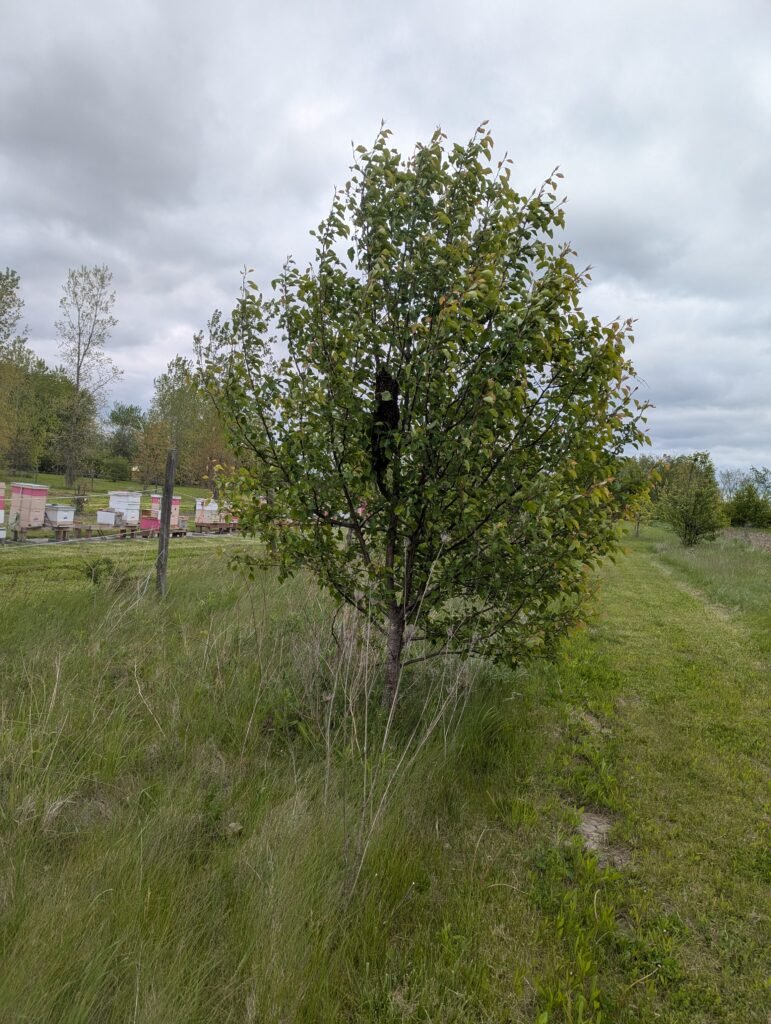
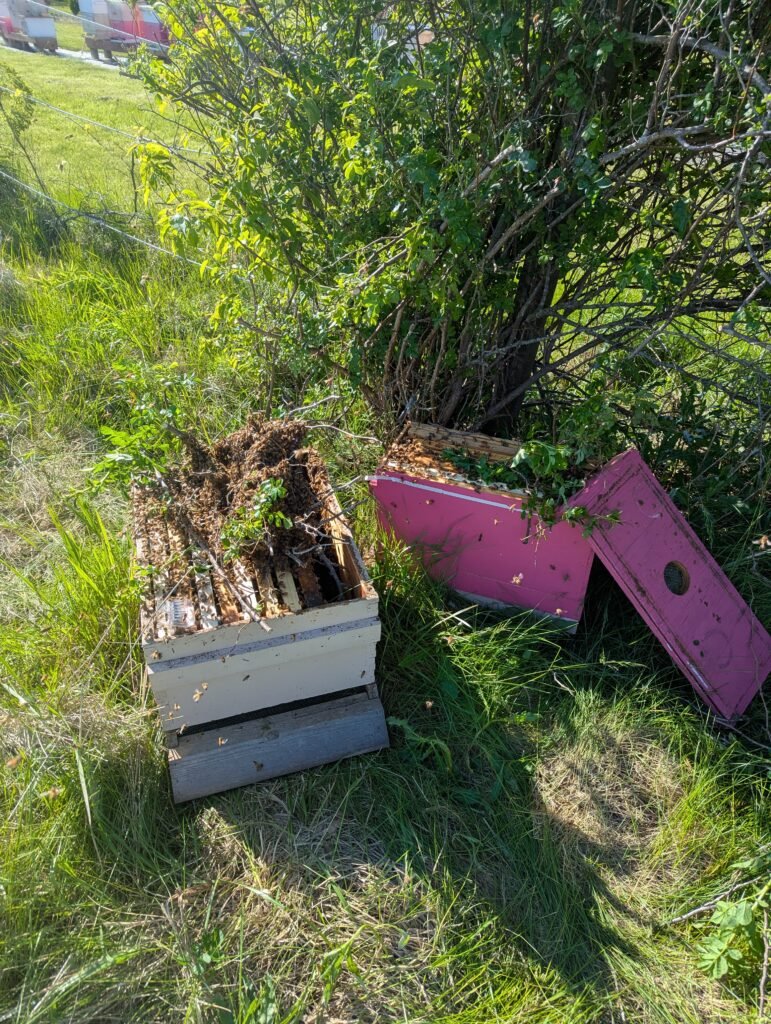
There is another phenomenon that some folks call “swarming”, but it’s actually absconding. This is when the entire colony leaves. Absconding is usually caused by an issue with the house. Maybe it’s too damp. Maybe there’s a predator like a raccoon bothering the bees. Maybe varroa mite and the diseases they cause forced an abscond. Learn more about varroa here.
Lastly, swarms look scary. Bees everywhere. If you look closely you’ll see them slowly collect where they plan to land. Soon, all will be calm. They may stick around for an hour. They may stick around for days. If you see a swarm, contact a beekeeper! Visit my YouTube, Facebook, or Instagram for videos of active swarms!